Best class for garba in mira road
- Home
- Best class for garba
Introduction
Traditional Indian dance, known as garba, honors female fertility and pregnancy while paying homage to the strong goddess Durga. Garba is now well liked everywhere in the world. It gives foreigners access to rich cultural knowledge and brings Indians together, enabling them to take part in cultural events. In many Indian religious festivals around the world, garba is a significant component. Gorgeous costumes and upbeat music are two factors that make Garba so popular. Several facets of this dance are examined in this piece.
Discover the Best Garba Classes in Mira Road
Garba is more than just a dance; it’s a vibrant celebration of culture, energy, and joy. If you’re in Mira Road and looking to learn or perfect your Garba skills, you’re in the right place! This area boasts some exceptional Garba classes that cater to enthusiasts of all ages. Here’s a guide to help you find the best Garba classes in Mira Road.
Garba is a traditional folk dance from India.
Garba is a type of dance that originated in Gujarat, a state in western India. It is performed in October to honor Goddess Durga, the Hindu deity of divinity. Even though Garba is primarily performed during Navaratri celebrations, it is a joyful folk dance that is performed as a sacred tradition in Gujarat on practically every special occasion. Although some of these dances involve men, Garba dancers are usually young girls and women.
In recent years, Garba has gained international acclaim for her message of divine energy within all people, which empowers them. Hundreds gather in one location and put on magnificent pomp and circumstance while performing in groups. When traveling to West India in October, you can witness the stunning dance and even participate with the locals.
Garba's origin
The word “Garba” has a profound symbolic meaning and is derived from a Sanskrit word that means “womb” or “deep.” This folk dance originated in Gujarat and was first performed in Vadodara, which is now considered the state’s cultural center because of its strong religious influence. Other names for Garba include Garbha, Garbha Deep, and Garbhi, depending on the regional dialect. The dance is performed in honor of women and celebrates fertility.
The importance of Garba in Hinduism
The lantern, which symbolizes the human body carrying the soul within, is the focal point of the garba dance. In the same way that Hinduism portrays time as a cycle, Garba highlights the infinite nature of birth, death, and reincarnation as dancers circle it in concentric circles. Goddess Durga and her power within the dancers’ souls endure forever, despite the fact that the entire universe changes and evolves
In Indian mythology, Garba
Garba was a crucial component of expressing the deity’s power, and Navaratri was celebrated to honor Goddess Durga’s victory over Evil in Hindu mythology. The most effective weapon she used to vent her anger on the demons during her quest for peace was her sword. During Garba, the goddess’ sword and invincibility are symbolized by dandiya sticks.
Garba during the festival of Navratri
This is a Hindu holiday that means “nine nights” in literal translation. While there are many different ways to celebrate this festival throughout India, Gujarat observes the ancient custom of honoring the goddess with a nine-night Garba dance. The dances start late at night and continue until the stroke of midnight. Men and women follow special diets and eat a limited number of foods during the nine days and nights of Navratri in accordance with their religious beliefs. Garba is performed at weddings, parties, social gatherings, and Holi, the spring festival, in addition to Navratri.
Different Garba Dance Styles
Garba folk dance events combine various Gujarati dance styles to produce a twirl, clap, and snap style. Taali Garba and tran taali Garba are the two dance forms that, in Gujarati, translate to “two-clap Garba” and “three-clap Garba,” respectively. Garba dancers must perform barefoot, and they do so on a variety of surfaces. Hindus think that doing this helps you connect with the Goddess and Mother Earth.
Participants create concentric circles, each of which travels in the opposite direction while moving counterclockwise. The tempo is progressively increased as the dancers start off with slow steps, and everyone’s feet synchronize to create a trance. Each form has incredibly simple steps that are suitable for people of all ages, skill levels, and abilities, in addition to being captivating to watch. Additionally, garba is a very demanding workout!
Garba Dance Music
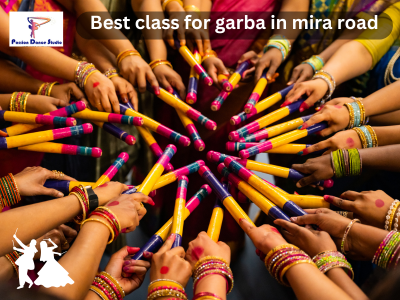
Despite what many people think, Garba is more than just the dance. Gujarat exposes you to a variety of lively musical genres from both urban and rural cultures, ranging from ethnic Dandiya songs like Kanhaiya and O Gori to modern Bollywood Garba music. Typically made of wood, dandiya sticks are held in pairs by all dancers, who use them to create a rhythmic tempo and wave them in time with the choreography.
The dhol, drum, and double-reed organs, or shehnai, are all Indian percussion instruments that are thought to be auspicious for the occasion and are played by professional musicians. In the early 21st century, bongos, synthesizers, harmoniums, and octapads have become more common due to modernization.
Traditional Garba Costumes
Even though the dance is the primary attraction, looking stunning for it is just as crucial. You can experience some of India’s most beautiful ethnic clothing at Garba. Kediyu is the traditional male costume, which consists of a round kurta, a turban with sequins on the head, and kafni pajamas.
Women dress in chaniya choli, a three-piece gown that consists of a long, flared skirt adorned with similar beads, tiny mirrors, and shells, and a blouse that is intricately embroidered. Women drape the dupatta, also known as the chuniya, around their heads and chests. Little girls wearing ghagra cholis are visible. Heavy silver-plated jewelry, glistening waist belts, maang tika, chunky metal bracelets, and jhumkas, or hanging earrings, are all common ways for both men and women to accessorize. The Garba look is equally important with bold eyeliner or kajal and bindis.
Common Concepts and Beliefs
- One of the most perplexing ideas is the distinction between Dandiya and Garba dance.
- Despite coming from Gujarat, both are performed on different occasions. Lord Krishna is worshipped in Vrindavan Gardens with the Dandiya.
- Additionally, colorful sticks are used for Dandiya, whereas Garba calls for more hand gestures, clapping, and circular dance patterns.
- Garba is not just a Gujarati festival; it is also celebrated in other Indian states and overseas, including the United States, Canada, and the Netherlands.
- It is time for India’s largest festivals, elaborate fairs, and Garba dance when the weather cools off in October. Prepare to have fun with other Indians during the nine days of Navratri as you travel through this gorgeously lit nation.
Conclusion
Mira Road offers some of the best opportunities to learn and enjoy Garba, with classes that cater to beginners and seasoned dancers alike. Whether you’re preparing for Navratri or simply want to experience the joy of Garba, enrolling in a local class is a step in the right direction.
Start your Garba journey today and let the beats of tradition ignite your spirit!